$55.00 – $449.00Price range: $55.00 through $449.00
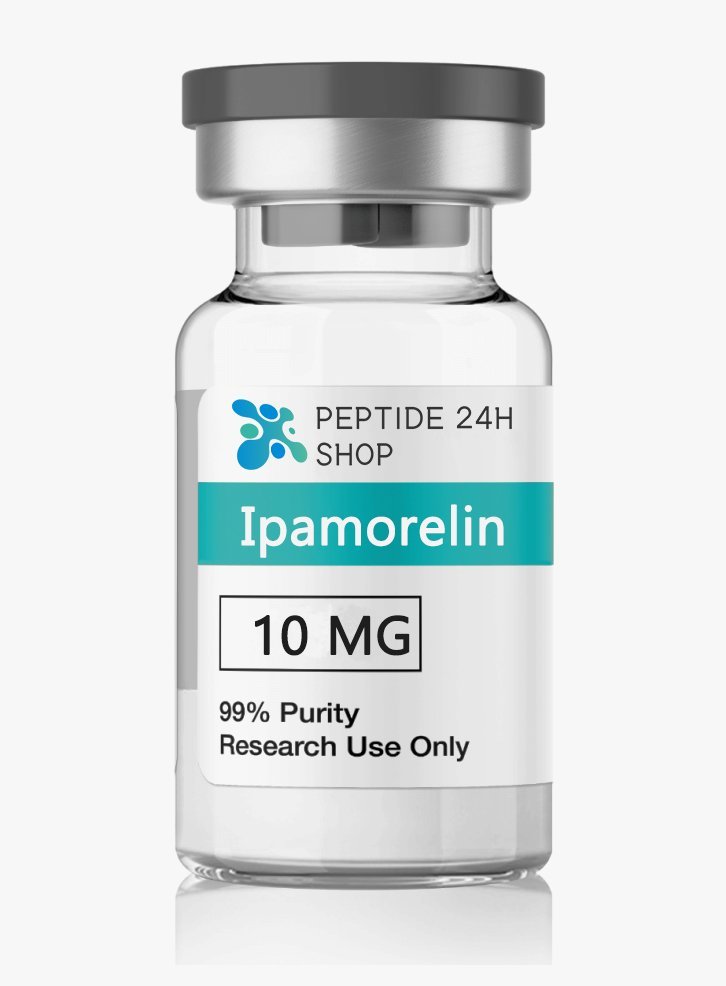
Name: Ipamorelin; Ipamorelin acetate;
CAS No.: 170851-70-4
Peptide Sequence: Aib-His-D2Nal-DPhe-Lys-NH2
Molecular Formula: C38H49N9O5
Molecular Weight: 711.87
Appearance: White Lyophilized powder
Ipamorelin is a selective growth hormone releasing peptide (GHRP) widely studied in scientific and experimental settings. Known for its precision and stability, it belongs to a class of growth hormone secretagogues (GHSs) that stimulate the natural release of growth hormone (GH) through interaction with the ghrelin receptor (GHS-R1a).
In laboratory models, Ipamorelin has demonstrated targeted growth hormone release without significantly affecting cortisol or prolactin levels — a property that distinguishes it from older GHRPs such as GHRP-2 and GHRP-6.
Because of its specificity and favorable research profile, Ipamorelin is often used to study muscle development, tissue repair, metabolism, and aging processes in controlled environments.
Ipamorelin is a synthetic pentapeptide composed of five amino acids that mimic the natural hunger hormone ghrelin, binding selectively to ghrelin receptors in the pituitary gland and hypothalamus.
This interaction triggers a pulse of growth hormone (GH) secretion, making it a highly valuable tool in endocrinological and metabolic research.
Unlike many growth hormone analogs, Ipamorelin’s activity is gradual and sustained, avoiding abrupt hormonal fluctuations that could confound experimental outcomes. Its clean receptor profile has made it one of the most reliable growth hormone secretagogues for peptide research.
| Property | Specification |
|---|---|
| Chemical Name | Ipamorelin |
| Sequence | Aib-His-D-2-Nal-D-Phe-Lys-NH₂ |
| Molecular Formula | C₃₈H₄₉N₉O₅ |
| Molecular Weight | ~711.9 g/mol |
| Purity (research grade) | ≥ 98% (HPLC verified) |
| Form | Lyophilized powder |
| Solubility | Water or bacteriostatic solution |
| Storage | −20 °C, desiccated |
| Stability | 24 months (lyophilized), short-term after reconstitution |
Ipamorelin works by binding to the growth hormone secretagogue receptor (GHS-R1a) — the same receptor activated by ghrelin, the natural hunger hormone.
Once bound, it stimulates the pituitary gland to release growth hormone into the bloodstream, which then acts on tissues through the IGF-1 (Insulin-like Growth Factor 1) pathway.
Key features of its mechanism include:
Selective GH stimulation: Unlike earlier peptides, Ipamorelin shows minimal or no stimulation of cortisol, prolactin, or ACTH.
Gentle, sustained release: Produces a steady growth hormone pulse, supporting more stable downstream effects.
Synergistic potential: May enhance GH output when combined with growth hormone releasing hormones (GHRHs) like CJC-1295 in research.
These properties make Ipamorelin a clean and controlled model for studying hormonal regulation, muscle metabolism, and anti-aging mechanisms.
Ipamorelin has been studied in various experimental and academic contexts for its potential biological roles.
Researchers use Ipamorelin to explore how growth hormone pulses influence cellular regeneration, protein synthesis, and muscle metabolism.
In cell and animal models, Ipamorelin has been linked to enhanced muscle fiber repair and reduced muscle wasting, making it relevant for studies on sarcopenia, injury recovery, and metabolic efficiency.
Growth hormone influences bone metabolism. Ipamorelin’s GH-releasing ability is being studied for potential effects on osteoblastic activity and bone mineralization.
Because natural GH secretion declines with age, Ipamorelin has become a subject of longevity research, focusing on cell renewal, collagen synthesis, and metabolic balance.
Its minimal impact on cortisol and ACTH makes Ipamorelin a valuable compound for studying energy utilization, glucose metabolism, and endocrine feedback loops without systemic hormonal interference.
⚠️ Disclaimer: All listed properties are under scientific investigation. Ipamorelin is not approved for human or veterinary use.
Ipamorelin offers several technical advantages compared to older GHRPs:
| Feature | Research Advantage |
|---|---|
| Selective receptor activity | Targets only GH release without unwanted hormonal stimulation. |
| Minimal side pathways | Low effect on cortisol or prolactin levels. |
| Stable structure | Excellent stability under standard lab storage conditions. |
| Gradual release | Produces steady, measurable growth hormone secretion. |
| Synergistic with GHRHs | Compatible with other GH-modulating compounds. |
These advantages have made Ipamorelin one of the most frequently studied GHRPs in the peptide research community.
Ipamorelin peptide should always be handled in controlled laboratory conditions:
Storage: Keep vials sealed at −20 °C in a dry, light-protected environment.
Reconstitution: Use sterile, distilled water or bacteriostatic solvent under aseptic conditions.
Shelf life: Lyophilized form remains stable for up to 24 months. Once reconstituted, use promptly.
Labeling: Must read “For Research Use Only — Not for Human Consumption.”
When sourcing Ipamorelin for research purposes, verify:
Purity of ≥ 98% (HPLC certified)
Verified molecular structure and analytical report (COA)
Cold-chain shipping for temperature integrity
Batch transparency for reproducibility
Proper regulatory labeling
These factors ensure accuracy and reliability in experimental results.
Q1. Is Ipamorelin a natural peptide?
No. Ipamorelin is a synthetic analog designed to mimic ghrelin’s GH-releasing effects in a selective and stable way.
Q2. What makes Ipamorelin different from GHRP-6 or GHRP-2?
Ipamorelin offers higher receptor selectivity and minimal stimulation of unwanted hormones like cortisol or prolactin.
Q3. What are its common research applications?
It’s used in studies exploring growth hormone physiology, muscle repair, aging, and metabolism.
Q4. Can Ipamorelin be used for human therapy or supplementation?
No. It is strictly intended for laboratory research use only.
Q5. How long can Ipamorelin be stored?
When lyophilized and frozen at −20 °C, it remains stable for up to two years.
Ipamorelin peptide represents the next generation of growth hormone secretagogues — precise, stable, and selective. Its ability to stimulate growth hormone release without altering other endocrine axes makes it a valuable compound for scientific research in metabolism, aging, and cellular growth.
Its clean profile, stability, and reproducibility have positioned Ipamorelin as a cornerstone molecule in the study of growth hormone dynamics and mitochondrial metabolism.
Disclaimer: All information provided is for scientific and educational purposes only. Ipamorelin peptide is not approved for human or veterinary use.