$65.00 – $189.00Price range: $65.00 through $189.00
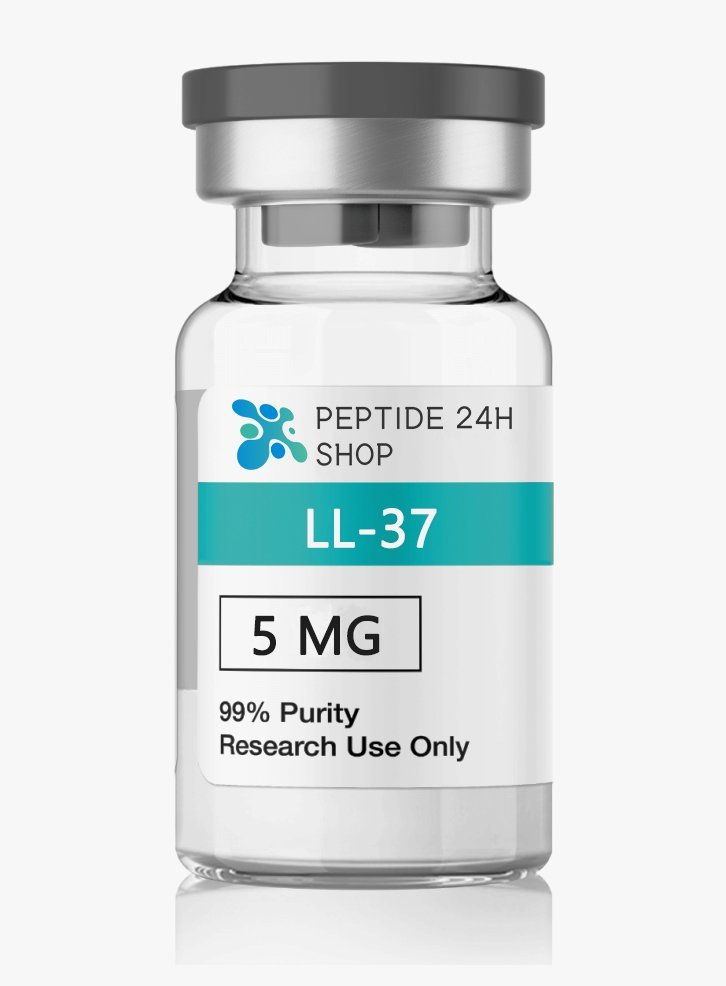
Name: LL-37 humam; LL-37; CAP-18; Cathelicidin; ropocamptide
CAS No.: 154947-66-7
Peptide Sequence: Leu-Leu-Gly-Asp-Phe-Phe-Arg-Lys-Ser-Lys-Glu-Lys-Ile-Gly-Lys-Glu-Phe-Lys-Arg-Ile-Val-Gln-Arg-Ile-Lys-Asp-Phe-Leu-Arg-Asn-Leu-Val-Pro-Arg-Thr-Glu-Ser
Molecular Formula: C205H340N60O53
Molecular Weight: 4493.26
Appearance: White Lyophilized powder
LL-37 peptide is a naturally occurring antimicrobial peptide derived from the human cathelicidin protein (hCAP18). It plays a vital role in the body’s innate immune defense system, acting as a first-line barrier against bacteria, viruses, and fungi.
In research environments, LL-37 is recognized for its antimicrobial, anti-inflammatory, and tissue-regenerative properties. It’s commonly studied in fields like microbiology, immunology, wound healing, and inflammation biology.
As a research compound, LL-37 peptide is for laboratory use only and is not approved for medical or therapeutic use.
LL-37 is the only human cathelicidin peptide identified to date. It is generated when the precursor protein, hCAP18, is cleaved during immune response activation.
In its natural form, LL-37 circulates in various tissues, including skin, respiratory tract, and immune cells, where it contributes to defense against microbial invaders.
In laboratory settings, synthetic LL-37 peptide is used to study:
Antimicrobial signaling mechanisms
Tissue regeneration and wound healing
Immune cell modulation
Inflammation and cytokine balance
These properties make LL-37 one of the most versatile research peptides in the study of human immunity and infection control.
| Property | Specification |
|---|---|
| Peptide Name | LL-37 (Human Cathelicidin) |
| Sequence | LLGDFFRKSKEKIGKEFKRIVQRIKDFLRNLVPRTES |
| Molecular Formula | C₂₀₃H₃₁₈N₅₆O₄₀ |
| Molecular Weight | ≈ 4493.3 g/mol |
| Appearance | White/off-white lyophilized powder |
| Purity (Research Grade) | ≥ 98% (HPLC verified) |
| Solubility | Water, PBS, or mild acetic acid |
| Storage | −20 °C, desiccated, and light-protected |
| Stability | 24 months (lyophilized) |
LL-37 exhibits both direct antimicrobial and immune-modulating activity.
LL-37 disrupts bacterial cell membranes, leading to cell lysis. It acts against gram-positive and gram-negative bacteria, fungi, and even some viruses.
LL-37 influences immune cell behavior by:
Regulating cytokine release
Enhancing macrophage and neutrophil activation
Supporting tissue regeneration and angiogenesis
In research, LL-37 has shown potential to:
Stimulate keratinocyte migration
Enhance collagen synthesis
Promote vascular repair and epithelial closure
Its dual action—antimicrobial defense and healing support—makes LL-37 a valuable peptide for inflammation and tissue recovery studies.
While LL-37 is not approved for clinical use, it is extensively explored across multiple scientific disciplines.
LL-37 is a cornerstone peptide in host defense studies, used to examine mechanisms of bacterial resistance and innate immunity.
LL-37 is studied for its role in immune regulation, influencing cytokines such as IL-6 and TNF-α.
Its capacity to promote cell migration, collagen production, and angiogenesis makes it key in tissue repair research.
LL-37 may help regulate inflammatory signaling in autoimmune and infection models, helping scientists understand chronic inflammation.
Because of its biofilm-disrupting effects, LL-37 is a frequent subject in antimicrobial resistance research.
⚠️ Note: LL-37 peptide is for research use only. It is not for human or veterinary use.
| Feature | Benefit to Researchers |
|---|---|
| Broad-spectrum antimicrobial | Effective against bacteria, fungi, and viruses |
| Immunomodulatory activity | Balances immune response and inflammation |
| Supports tissue healing | Enhances epithelial repair and angiogenesis |
| Stable synthetic form | High reproducibility and purity for lab use |
| Multi-field relevance | Used in microbiology, immunology, and dermatology studies |
To preserve LL-37 peptide’s stability and performance:
Storage: Keep lyophilized powder at −20 °C, sealed, and moisture-free.
Reconstitution: Use sterile water or phosphate-buffered saline (PBS).
Handling: Avoid repeated freeze–thaw cycles.
Labeling: Clearly marked “For Research Use Only – Not for Human Use.”
Shelf Life: 24 months (unopened, lyophilized).
When sourcing LL-37 peptide for laboratory research, ensure:
≥ 98% purity verified by HPLC or LC-MS.
Certificate of Analysis (COA) available for each lot.
Proper labeling and compliance with research-use standards.
Temperature-controlled packaging during shipping.
Transparent synthesis details from a reputable supplier.
High-quality synthesis ensures consistent biological performance in experiments.
Q1. What is LL-37 peptide?
LL-37 is a human cathelicidin-derived antimicrobial peptide that helps defend against pathogens and supports tissue repair in research models.
Q2. What is LL-37 used for in research?
It is studied for its roles in antimicrobial defense, immune modulation, and wound healing.
Q3. Is LL-37 naturally found in humans?
Yes. It’s the only known human cathelicidin peptide, produced by immune and epithelial cells.
Q4. Can LL-37 be used therapeutically?
No. It is strictly for research use and not approved for medical or clinical applications.
Q5. How is LL-37 stored?
Store at −20 °C, dry and dark, to maintain long-term stability.
LL-37 peptide is one of the most dynamic research peptides known for its antimicrobial and immune-modulating potential. As the only human cathelicidin-derived peptide, it plays a vital role in defense, healing, and immune balance.
In research laboratories, LL-37 continues to provide valuable insights into infection control, skin regeneration, and immune response regulation, making it an indispensable molecule for modern biomedical studies.
Disclaimer: LL-37 peptide is for research and laboratory use only. It is not approved for human or veterinary use.