$50.00 – $399.00Price range: $50.00 through $399.00
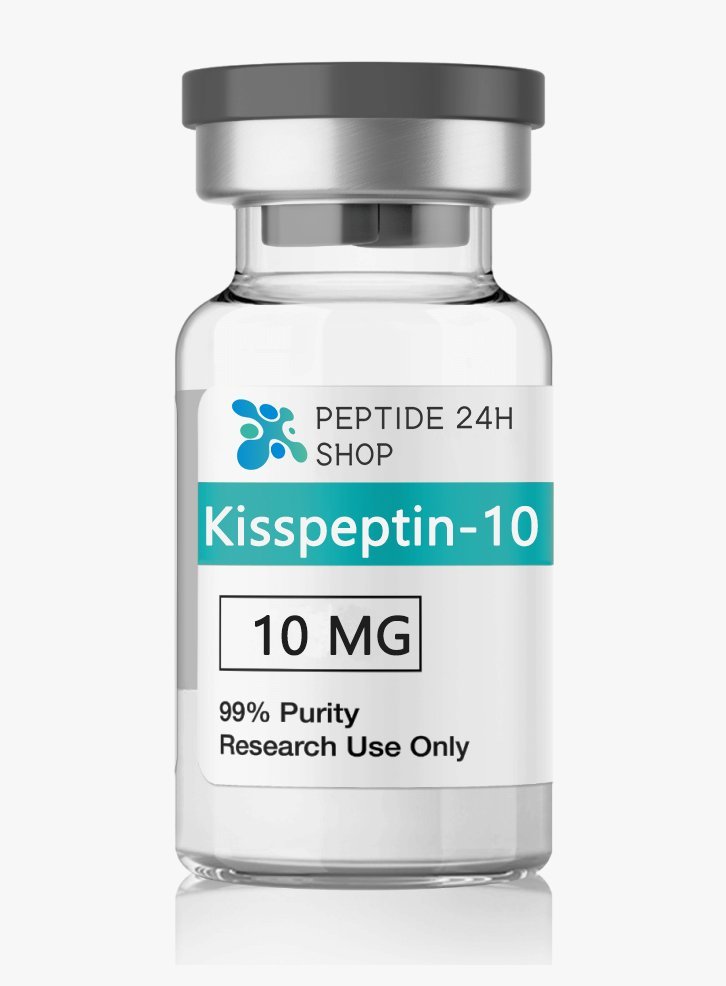
Name: Kisspeptin-10; Kisspeptin 4-13; Kisspeptin-10 (4-13)
CAS No.: 374675-21-5
Peptide Sequence: Tyr-Asn-Trp-Asn-Ser-Phe-Gly-Leu-Arg-Phe-NH2
Molecular Formula: C63H83N17O14
Molecular Weight: 1302.4
Appearance: White Lyophilized powder
Kisspeptin-10 is a bioactive fragment of the Kisspeptin protein family, a group of peptides that play a central role in the regulation of reproductive hormones. Originally identified for its ability to suppress tumor metastasis, Kisspeptin-10 has since gained significant attention in the fields of endocrinology, reproductive biology, and neuroendocrine signaling.
In scientific research, Kisspeptin-10 is used to study how the hypothalamic-pituitary-gonadal (HPG) axis controls the release of gonadotropin-releasing hormone (GnRH), influencing fertility, puberty, and hormone balance.
As with all peptides of this class, Kisspeptin-10 is intended strictly for laboratory research use only and is not approved for human or veterinary use.
Kisspeptin-10 is a short peptide chain of 10 amino acids, derived from the longer Kisspeptin-54 (metastin) sequence. Despite its small size, it retains full biological activity and binds effectively to the GPR54 receptor (also known as the Kiss1 receptor).
This interaction plays a key role in stimulating GnRH secretion from the hypothalamus, which in turn triggers the release of luteinizing hormone (LH) and follicle-stimulating hormone (FSH) from the pituitary gland.
These hormones are essential for regulating reproductive cycles, gametogenesis, and puberty onset. Because of these properties, Kisspeptin-10 has become a major focus in fertility and hormone research.
| Property | Specification |
|---|---|
| Chemical Name | Kisspeptin-10 (Human) |
| Sequence | Tyr-Asn-Trp-Asn-Ser-Phe-Gly-Leu-Arg-Phe-NH₂ |
| Molecular Formula | C₆₄H₈₄N₁₆O₁₃ |
| Molecular Weight | ~1,302.5 g/mol |
| Form | Lyophilized powder |
| Purity (research grade) | ≥ 98% (HPLC verified) |
| Solubility | Water or acetic acid solution |
| Storage | −20 °C, protected from light and moisture |
| Stability | Up to 24 months (lyophilized) |
Kisspeptin-10 functions primarily through the GPR54 receptor on hypothalamic neurons. When activated, this receptor stimulates the release of GnRH, initiating a cascade that controls reproductive hormone levels.
Mechanistic steps include:
Receptor activation: Kisspeptin-10 binds to GPR54 on GnRH neurons.
GnRH release: This binding stimulates secretion of gonadotropin-releasing hormone.
Pituitary stimulation: GnRH acts on the pituitary gland to promote release of LH and FSH.
Hormonal cascade: LH and FSH regulate ovarian and testicular function, influencing fertility and reproductive cycles.
This precise pathway makes Kisspeptin-10 a valuable research tool for exploring puberty, fertility regulation, and endocrine feedback mechanisms.
While Kisspeptin-10 is not approved for therapeutic use, it is widely studied in preclinical models for its physiological effects and signaling properties.
Kisspeptin-10 is frequently studied for its role in initiating puberty and regulating fertility, as it directly affects the release of reproductive hormones.
It serves as a model compound to examine hypothalamic-pituitary communication, allowing researchers to map hormonal feedback loops with high specificity.
Scientists use Kisspeptin-10 to understand hormonal disorders related to delayed puberty, infertility, or suppressed gonadotropin function.
Kisspeptin-10 is being explored for its role in neuronal signaling and neuroplasticity, as it connects reproductive regulation with central nervous system function.
Because of its conserved function across mammalian species, Kisspeptin-10 helps researchers study evolutionary aspects of reproduction and hormone regulation.
⚠️ Disclaimer: These studies are for scientific exploration only. Kisspeptin-10 is not a drug, supplement, or approved therapeutic compound.
| Feature | Research Advantage |
|---|---|
| High receptor affinity | Potent binding to GPR54 for consistent experimental results |
| Compact structure | Easy to synthesize and stable under lab conditions |
| Reproducible effects | Predictable GnRH response for endocrine modeling |
| Cross-species activity | Useful in comparative research models |
| Non-toxic in vitro profile | Well-tolerated in cellular environments |
To maintain Kisspeptin-10 stability and integrity:
Storage: Keep lyophilized peptide sealed at −20 °C, protected from light and moisture.
Handling: Use gloves and aseptic techniques; avoid repeated freeze–thaw cycles.
Reconstitution: Dissolve in sterile water or buffer solution appropriate for the study.
Shelf life: Stable up to 24 months when lyophilized; use reconstituted solution promptly.
Labeling: Must state “For Research Use Only – Not for Human or Veterinary Use.”
When acquiring Kisspeptin-10 for research purposes, it’s essential to verify:
Purity ≥ 98% (HPLC validated)
Certificate of Analysis (COA) confirming molecular identity
Proper packaging in sterile, sealed vials
Temperature-controlled shipping for peptide stability
Transparent sourcing and labeling in accordance with research compliance
These factors ensure experimental consistency and reliability.
Q1. What does Kisspeptin-10 do in research settings?
It’s studied for its ability to stimulate GnRH release, thereby influencing reproductive hormone secretion and puberty onset.
Q2. How is Kisspeptin-10 different from Kisspeptin-54?
Kisspeptin-10 is a shorter, active fragment of the full Kisspeptin protein with similar biological activity but greater stability and ease of synthesis.
Q3. Can Kisspeptin-10 be used therapeutically?
No. Kisspeptin-10 is strictly for laboratory research and is not approved for human consumption or medical use.
Q4. Why is it important in fertility research?
It plays a crucial role in initiating the hormonal cascade that governs ovulation and spermatogenesis.
Q5. What kind of studies use Kisspeptin-10?
It’s commonly used in endocrinology, fertility, neuroendocrine, and developmental biology research.
Kisspeptin-10 is a pivotal research peptide that helps scientists understand the hormonal mechanisms controlling reproduction, puberty, and fertility. As a potent activator of the GnRH–LH–FSH axis, it serves as a vital model compound in endocrine and reproductive biology.
Its stability, potency, and reproducibility make Kisspeptin-10 one of the most valuable tools in modern peptide research.
Disclaimer: This information is intended for scientific and educational purposes only. Kisspeptin-10 peptide is not approved for medical or veterinary use and is for research use only.