$55.00 – $1,300.00Price range: $55.00 through $1,300.00
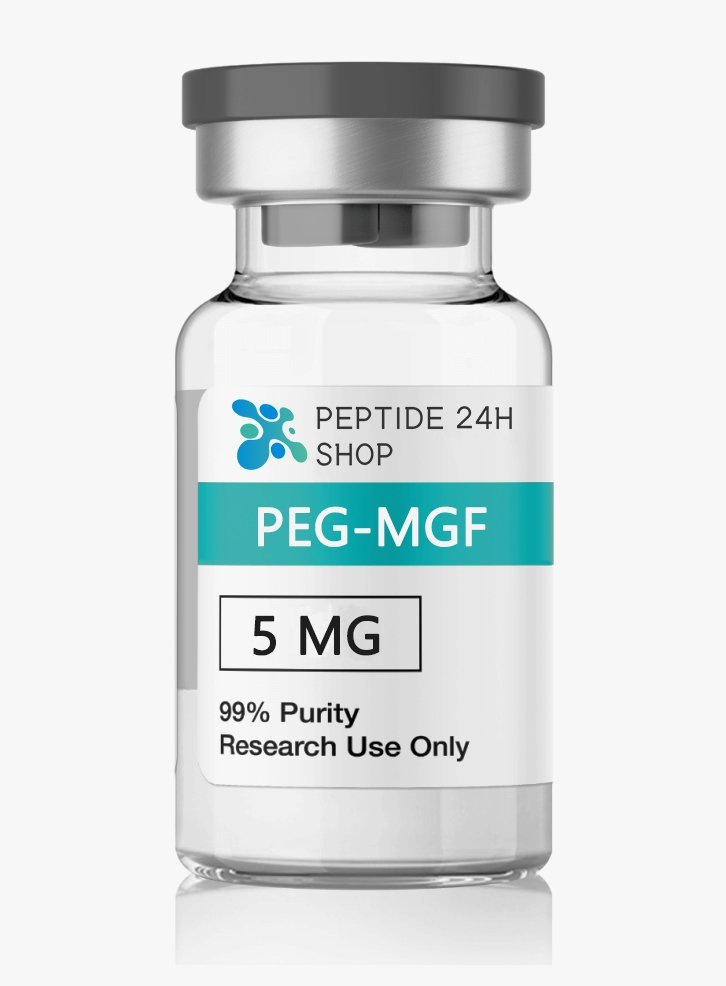
Name: PEG-MGF
Peptide Sequence: PEG1900-Suc-Tyr-Gln-Pro-Pro-Ser-Thr-Asn-Lys-Asn-Thr-Lys-Ser-Gln-D-Arg-D-Arg-Lys-Gly-Ser-Thr-Phe-Glu-Glu-Arg-Lys-NH2
PEG-MGF peptide (Pegylated Mechano Growth Factor) is a synthetic peptide analog derived from Mechano Growth Factor (MGF), itself a splice variant of the Insulin-like Growth Factor 1 (IGF-1) gene.
Through pegylation—the chemical attachment of polyethylene glycol (PEG) to the peptide chain—PEG-MGF achieves enhanced stability, longer half-life, and slower degradation in experimental models.
In scientific settings, PEG-MGF is widely used to explore cellular repair mechanisms, growth factor signaling, and tissue regeneration pathways in in vitro and in vivo research models.
Peptide Name: PEG-MGF (Pegylated Mechano Growth Factor)
Sequence: YQPPSTNKNTKSQRRKGSTFEEHK-NH₂ (MGF fragment with PEG modification)
Molecular Weight: ~3000–4000 Da (varies by PEG chain length)
Molecular Formula: Variable (based on PEGylation degree)
Form: Lyophilized powder
Purity: ≥98% (HPLC verified)
Storage: −20 °C, desiccated
PEGylation is achieved by attaching PEG chains to the peptide termini, which shields the molecule from enzymatic breakdown and extends its biological availability in research systems.
Mechano Growth Factor (MGF) was originally identified as a tissue-specific splice variant of IGF-1, expressed in response to mechanical stress or injury. Researchers soon developed PEG-MGF to investigate how molecular stabilization influences growth factor signaling and cellular repair dynamics.
PEG-MGF has since become a key model in cellular biology, tissue engineering, and biochemical signaling research, particularly in understanding how peptides regulate cell proliferation, gene expression, and regeneration under experimental conditions.
PEG-MGF is often used in cell culture experiments to study myoblast proliferation, protein synthesis, and growth factor receptor activation.
The PEG modification makes it ideal for investigating peptide pharmacokinetics, resistance to enzymatic degradation, and enhanced peptide bioavailability in biological models.
PEG-MGF helps researchers explore IGF-related signaling pathways, focusing on how alternative splicing and post-translational modifications affect growth factor functionality.
PEG-MGF peptide is widely used across research disciplines, including:
Molecular biology – to study growth factor signaling and peptide–receptor binding
Biochemical research – to explore PEGylation and stability mechanisms
Cellular regeneration models – as a peptide analog in controlled experiments
Protein engineering – for testing PEG-conjugation effects on peptide performance
Its prolonged stability and versatile structure make PEG-MGF a valuable model for studying synthetic peptide enhancement techniques and signal transduction in growth-related pathways.
Storage: −20 °C in lyophilized form
Solubility: Water or sterile buffer (pH 7.0–7.4)
Shelf Life: Up to 24 months (lyophilized, unopened)
Reconstitution: Prepare fresh solutions for each experiment
Handling: Use protective equipment and follow peptide lab safety protocols
Usage: For research use only (RUO) — not for human or veterinary use
PEG-MGF peptide is not approved by the FDA, EMA, or TGA for therapeutic or dietary use.
It must be distributed and labeled strictly for laboratory research purposes.
All handling should comply with institutional biosafety and chemical handling guidelines.
PEG-MGF peptide represents a key advancement in growth factor and peptide research, offering scientists a highly stable and versatile analog for exploring cellular signaling and regenerative pathways.
Its pegylated design improves molecular longevity, making it a superior tool for studies in protein biochemistry, molecular engineering, and peptide pharmacology.
While not approved for medical use, PEG-MGF continues to be a core research peptide in labs investigating growth regulation and peptide modification technologies.